

Where we are
Generative AI has gained an amazing amount of attention and investment in the insurance industry over the last few years, and in 2025 agentic AI will be fueling additional attention and excitement.
Seemingly every industry is rushing to embrace gen AI technology, and the insurance industry is no exception. Companies with GPT models — such as OpenAI, Amazon, Google, Microsoft, Meta, Anthropic and others — continue to invest heavily in developing and improving their respective large language models (LLMs). These models are showing insurers they have the potential to revolutionize the insurance industry and are already dramatically influencing the way insurers do business.
Celent anticipates that the speed of technology advancements in the field of gen AI (e.g., agentic AI, faster/more efficient compute such as DeepSeek and Alibaba’s QwQ-32B) — combined with competitive pressures and the maturation of gen AI application through increasing insurer comfort level and regulatory clarity — will continue to fan the flame for investment by insurers.
> Webinar | See how IDP is driving insurance modernization
Based on a Celent survey of North American insurers in March 2025 on the use of gen AI in insurance, insurers are hearing the call, with 44% already having a gen AI-based solution in production. This marks a 57% increase over those who had gen AI in production in 2024. Additionally, another 38% noted they will have a gen AI solution in production within the next year.
If the projected use holds true, approximately 80% of U.S. insurers will have implemented a gen AI-based solution by the first quarter of 2026, an impressive statistic. Adoption of gen AI is spread across the insurance value chain, with internally facing customer experience (aka employees) being the primary area of focus.
> Learn more | How intelligent automation and AI are shaping organizational strategies
Additionally, claims and underwriting are quickly making a run at the top, most likely due to the enormous efficiency gains insurers are seeing in document ingestion and summarization of vast amounts of data used in claims and underwriting use cases, especially unstructured data.
Many insurers are also leveraging third-party relationships to be able to quickly get what they need. The good news, based on our findings in Celent’s recent “GenAI in Legacy Modernization” report, platform and service providers are rapidly adapting gen AI in their platforms and services, adding a plethora of new capabilities in a very condensed timeframe.

The future of agentic AI and the rapid pace of change
One thing insurers are learning is that the launch of GPT models came with a blistering pace of change. And here comes agentic AI, which refers to AI systems that can act autonomously and make decisions and execute tasks based on data analysis.
Agentic AI is slowly beginning to gain traction in the insurance industry and is quickly becoming the new topic of discussion for the next step in AI applications.
Agentic AI holds significant future potential for transforming insurance operations across various functions. This leap toward more independent AI agents promises to reshape how insurance companies operate, leading to even more increased efficiency, improved customer experiences and enhanced risk management.
Already, a small percentage of insurers are putting agentic AI solutions through pilots and proof of concepts, with a select few (4%) transitioning to production. As noted in Celent’s most recent gen AI survey, 22% of insurers stated they will have an agentic AI-based solution in production by year-end 2026.
> Learn more | The three keys to insurance innovation
The potential for agentic AI in insurance operations
Customer service
Virtual assistants, handling complex policy queries, can provide around-the-clock hyper-personalized support across multiple channels and guide customers through processes such as onboarding or claims submission. Agentic AI can also proactively engage policyholders with timely reminders and coverage suggestions, enhancing the overall customer experience.
Underwriting
Agentic AI analyzes vast amounts of structured and unstructured data in real time to create more accurate and dynamic risk profiles. This enables personalized policy pricing and recommendations, reducing mispriced risk. Like gen AI, agentic AI frees up even more time for underwriters to focus on complex cases and final approvals.
Claims processing
Agentic AI has the potential to automate the entire claims life cycle, from initial assessment and document verification to fraud detection and payout recommendations. It will significantly reduce processing times, increase straight-through processing by improving operational efficiency and minimizing manual touchpoints, and enhance customer satisfaction through faster claims resolution.
Fraud detection and prevention
By continuously analyzing data patterns and monitoring claims submissions in real time for anomalies, agentic AI strengthens fraud detection. It can coordinate with external databases to validate claim authenticity, helping reduce losses from fraudulent activities.
Climate risk and ESG modeling
Agentic AI can analyze real-time environmental data to improve risk modeling related to climate change and other ESG factors.
General operational efficiency
Agentic AI automates routine administrative functions such as policy updates, claims approvals and compliance reporting. It can also optimize employee resources, reduce errors and decrease the cost of rework, leading to operational expenditure savings and improved profitability.
Stronger regulatory compliance
Agentic AI streamlines reporting and supports adherence to rules.
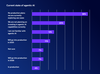
The following chart is the response when asking insurers for their thoughts on the future impact of agentic AI across the insurance value chain:

With new AI tech comes new challenges
Despite the immense potential, several challenges need to be addressed for successful implementation of gen AI and agentic AI in insurance.
Regulatory compliance and explainability
Insurers must ensure transparency in AI decision-making to meet regulatory standards and prevent discriminatory practices. The “black box” nature of many LLM’s makes it difficult to explain their reasoning.
Addressing the challenge:
Prioritize transparency and explainability in AI models, opting for interpretable AI techniques where possible.
Implement strong AI governance frameworks that include regular audits for bias and fairness.
Maintain detailed records of data used, model development and decision-making processes for regulatory review, even if not currently required.
Engage with regulatory groups to understand evolving requirements for AI in insurance.
Bias and ethical considerations
Any LLM can perpetuate biases present in the data they are trained on, leading to unfair or discriminatory outcomes. Insurers are tasked with ensuring fairness and taking into account ethical considerations.
Addressing the challenge:
Establish clear ethical guidelines and principles for AI. These principles should reflect the organization’s values and legal requirements.
Provide extensive training to ensure that gen AI can reason effectively and provide reliable outputs.
Curate and audit training data for potential biases.
Employ bias detection and mitigation techniques during model development.
Continuously monitor AI systems for discriminatory patterns and recalibrate models as needed.
Legacy system integration
Integrating new AI systems with existing legacy infrastructure can be complex and costly.
Addressing the challenge:
Adopt a phased approach to integration, prioritizing key areas for AI implementation.
Utilize APIs and middleware to connect legacy systems with new AI platforms.
Consider cloud-based solutions for greater flexibility and scalability.
Job displacement concerns
Process automation driven by any form of AI may lead to concerns about job displacement for employees.
Addressing the challenge:
Create a communication plan for all things AI.
Invest in training and upskilling existing employees.
Create an AI university and/or AI certification program.
Partner with external AI vendors and consultants to assist in developing in-house skills or bridging the skills gap.
High initial implementation costs
Investing in the necessary technology, talent and infrastructure for gen AI and agentic AI can involve significant upfront costs.
Addressing the challenge:
Leverage cloud platforms to access scalable and cost-effective computing resources.
Optimize AI models for efficient performance.
Invest in the necessary IT infrastructure and expertise to support AI deployments.
Potential for unintended consequences
As AI agents operate with increasing autonomy, there is a risk of unintended actions or outcomes that could negatively impact customers or the business.
Addressing the challenge:
AI agents should undergo extensive testing in simulated environments that mimic real-world scenarios, including edge cases and potential failure modes.
Employ formal methods to verify the correctness and safety properties of AI agent components.
Design agents with modular components and prioritize interpretability (understanding why an agent made a particular decision) to make it easier to debug, monitor and understand potential failure points.
Design agents with only the necessary permissions and access to data and systems required for their specific tasks.
AI agents should undergo extensive testing in simulated environments that mimic real-world scenarios, including edge cases and potential failure modes.
The future landscape
The future of agentic AI in insurance will likely involve a highly integrated approach, blending the strengths of AI with employee expertise. Autonomous AI agents will handle routine tasks and provide data-driven insights.
As the efficiency gains are realized, employees will focus more on complex decision-making, exception handling and strategic initiatives. The development of user-friendly, no-code interfaces will also enable wider adoption across different insurance teams.
As agentic AI technology matures and challenges are addressed, agentic AI is positioned to become a key component of the insurance industry solution landscape, driving innovation and delivering significant value.
About the author
Keith Raymond is a principal analyst in Celent’s North American insurance practice. He has extensive industry experience and is a seasoned expert in AI, generative AI, process automation, business transformation and operations for property and casualty, and life, health and annuities. Keith’s research is focused on process automation across the insurance value chain, and he authors a series of Celent reports on generative AI’s impact in insurance operations. He speaks frequently at major insurance industry technology conferences such as Insurtech Connect, Insurtech Insights and Insurance Innovators. Keith also facilitates a Gen AI Bootcamp for North American insurers and Celent’s annual Gen AI Symposium.

Article
A policyholder-first approach to the insurance experience
Celent analyst explores how insurers can improve the online customer experience through customer focus and digitization.

Article
Why modernization, automation and AI are key to insurance innovation
Explore key challenges, benefits and use cases for advanced technologies that can put insurers on a path to success.

Article
Adapting to generational shifts: Meeting the changing needs of insurance agents
As the older generation retires, agents' needs — and preferences — are changing. Celent's Karlyn Carnahan explores how insurers can adapt.

Article
Your agentic enterprise: The new reality of AI and enterprise content
Two breakthrough innovations radically expand the reality of what ECM means. With Hyland’s bold approach to weaving AI into your content universe, you can move faster than ever and realize incredible outcomes.