Vendor consolidation: A strategic framework for modernizing your tech stack
Move beyond fragmented suppliers to a streamlined ecosystem that reduces costs, mitigates risk and prepares your organization for AI-driven automation.

Summary
Vendor consolidation is a strategic approach where a company reduces its supplier base to build stronger relationships with a core group of high-performing vendors.
Core challenge and solution: The main challenge is a sprawling, complex vendor landscape. A consolidated approach, powered by a unified content platform, lowers costs and operational risks by centralizing control.
Key capabilities: An AI-powered platform with federated content access, AI-ready data preparation and intelligent automation can centralize disparate systems without costly migrations.
Strategic value: A streamlined tech stack doesn't just reduce overhead. It creates a foundation for scalable, AI-powered intelligence that accelerates decision-making.
Common drivers of vendor sprawl
Vendor sprawl isn't an accident. It's the predictable result of decentralized purchasing, a lack of spend visibility and siloed departmental needs piling up over time.
This problem is getting more attention. A Gartner Strategic Planning report found that 24% of IT and security leaders identify vendor consolidation as a key priority. Data from a McKinsey Pulse survey supports this, showing a majority of decision-makers prefer integrated solutions for IT services, including cloud (53%) and security (48%). Without a central strategy, organizations accumulate an excessive number of vendors, creating complexity that directly hinders performance.
> Read more | Comprehensive guide to vendor relationship management (VRM)

2026 Gartner® Magic Quadrant™ for Document Management
Hyland is offering complimentary access to the 2026 Gartner® Magic Quadrant™ for Document Management — an independent analysis of the leading vendors in the market.
Hyland has been named a Leader, recognized for our broad capabilities, vision alignment and industry expertise.
Use this report to benchmark vendors, build an internal business case, or accelerate your evaluation.
Critical signs your organization needs to consolidate
The pain points of a fragmented vendor ecosystem show up as clear operational and financial drains. The question isn't if it's causing problems. It's how much they're costing you.
Complexity in management
Managing dozens of vendor relationships, contracts and training requirements is a massive drain on resources. Managing a large number of vendors creates significant management complexity that dilutes focus and effectiveness. Operating on various platforms with no integration between tools creates deep inefficiencies.
Service offering issues
Disparate systems from multiple vendors create data silos. This fragmentation stops the flow of information across platforms, making it impossible to get a clear view of operations. Monitoring, reporting and troubleshooting become complicated nightmares when your tools don't communicate with each other.
> Read more | Overcoming information silos
Inflated operational costs
Vendor sprawl has significant hidden costs. These include duplicate service subscriptions, missed volume discounts and increased administrative overhead from managing countless invoices and contracts. Integrating these disparate systems often requires custom development or extra tools, which only drives up overhead even further.
> Read more | Reducing operational costs
Loss of user productivity
Productivity plummets when employees have to constantly switch between different systems to find information or complete basic tasks. A platform with unified search capabilities, like Hyland Knowledge Discovery, solves this problem by giving users a single interface to search for information across multiple connected repositories, so they can find what they need instantly.
> Read more | Understanding bottleneck analysis: Enhancing business efficiency

2025 Gartner® Hype Cycle™ for Artificial Intelligence
Explore the future of AI and transform your enterprise with this must-read analysis on AI’s reality and potential
As AI evolves, enterprises are shifting their focus from generative AI hype to foundational innovations that drive scalable, impactful change. In this comprehensive report from Gartner, leaders get a roadmap for how to prioritize emerging AI technologies, so they can stay ahead with the right tools.
Explore key insights into the AI adoption journey, including the transition from experimental phases to scaling operations. Uncover how AI-ready data, AI governance and responsible AI implementations are becoming essential differentiators for businesses.
The security risks of vendor sprawl
A fragmented vendor ecosystem doesn't just hurt efficiency. It creates significant compliance and security vulnerabilities that put your organization at risk.
Inconsistent identity and access management
Managing user identity, authentication and access controls becomes exponentially harder with every new vendor you add. A single platform offers centralized governance, so you can apply consistent security and access policies across the entire organization.
Fragmented information lifecycle management
Ensuring proper data retention and handling of personally identifiable information (PII) is nearly impossible across dozens of disconnected systems. A unified platform can enforce consistent information lifecycle management, including retention policies, even on content that remains in its original repository via federation.
Gaps in security patching and upgrades
The difficulty and risk associated with keeping all vendor systems properly patched and upgraded on time increases with each new solution. A missed patch on a single forgotten system can expose the entire enterprise.
Increased third-party and compliance risk
Each new vendor introduces another source of third-party risk that must be managed. Enforcing consistent compliance and AI governance standards is far more complex when policies are spread across a wide array of vendor solutions with different capabilities and security postures.
> Read more | Comprehensive guide to vendor risk management (VRM)
With gen AI, we can now give structure to what was previously unstructured. ... enable organizations to understand what’s inside them and drive greater automation.
The benefits of a streamlined vendor ecosystem
Moving to a consolidated vendor model delivers clear strategic advantages that go far beyond just cleaning up your supplier list.
Reduced costs
The financial benefits are immediate. Consolidation gives you enhanced negotiating power for volume discounts and lowers administrative expenses from managing fewer contracts and invoices. It also eliminates redundant software licenses and overlapping maintenance costs.
Streamlined service and operations
A single management platform or a reduced set of integrated vendors simplifies training, onboarding and support processes. This allows you to establish a single source of truth for your data, which leads to improved service quality and faster issue resolution.
Enhanced security and governance
A consolidated platform centralizes security protocols. It simplifies monitoring and ensures the consistent application of security patches across your entire tech stack. This approach also lets you implement a unified AI governance framework with consistent guardrails, human-in-the-loop checkpoints and data protection policies.
Reduced supply chain risk
Consolidation allows for building deeper, more strategic partnerships with a core group of financially stable and high-performing vendors. This focus mitigates risk by ensuring business continuity and giving you greater visibility into your supply chain.

Analyst white paper: Maximize your business value with content intelligence and AI
Intelligent Business Strategies examines how Hyland helps you unlock the hidden value of your data
GENERAL You can overcome the challenges of managing unstructured data and turn it into actionable insights with AI. Read this groundbreaking white paper from analyst firm Intelligent Business Solutions to explore the newest innovations in content management. Download your copy now and take the first step toward transforming fragmented data into a strategic advantage with Hyland.
Strategies to modernize the tech stack
A successful vendor consolidation initiative requires a clear, actionable framework. It's about making smart, data-driven decisions.
Step 1: Perform a comprehensive spend and content analysis
Start by analyzing your total company spend across all vendors and categories. This will help you identify redundancies and consolidation opportunities. Look for categories with high vendor fragmentation or services that clearly overlap.
Step 2: Prioritize high-impact departments and opportunities
Segment your vendors and prioritize consolidation efforts on "leverage" categories where the supply risk is low but the profit impact is high. Focus on areas where consolidation can deliver an immediate and significant impact on cost, risk, or efficiency.
Step 3: Align with AI readiness
This is a forward-looking assessment of which vendors can provide a true, AI-powered foundation for the future. You need a platform that can make unstructured content AI-ready by digitizing, structuring and enriching it with tools like Hyland Knowledge Enrichment. A unified, AI-powered platform gives you a strategic advantage over managing multiple vendors with disconnected or nonexistent AI roadmaps.
> Read more | Before you invest in AI, assess your AI-readiness
Unlocking the insights from enterprise content of all sorts ... to drive operational outcomes and analytical outcomes opens up incredible opportunities for our customers.
Real-world examples of modernization
Successful consolidation and modernization initiatives provide a blueprint for what's possible.
Pennsylvania Treasury
For a government agency like the Pennsylvania Treasury, modernization isn't just about cost. It's about serving citizens better. Consolidating disparate records systems into a unified platform improves data access, secures sensitive information and automates manual processes, so the agency can operate more efficiently and transparently.
Baptist Health
In healthcare, vendor sprawl can directly impact patient care. A health system like Baptist Health can modernize by consolidating patient information from different electronic medical records (EMRs) and imaging systems. This creates a single, comprehensive patient view, which improves clinical decision-making and interoperability.
Siemens
Siemens transformed its accounts payable department by automating its processes. This is a powerful example of consolidation in action—moving from fragmented, manual workflows to a centralized, automated system that cuts costs, reduces errors and accelerates payment cycles.

Subscribe to The Shift
Hyland’s monthly newsletter helps you elevate your content management strategy
Offering unparalleled insights into the AI and cloud technologies transforming what content can do, The Shift gives you actionable strategies from industry thought leaders. Learn from real-world success stories and innovative perspectives that will keep your organization at the forefront of ECM transformation.
Subscribe to stay ahead, stay informed and make your enterprise content an even more strategic asset.
Conclusion: Begin your modernization journey
Hyland Content Innovation Cloud™ is the ideal platform for vendor consolidation. It creates a unified, intelligent foundation that directly addresses the root causes of vendor sprawl.
This AI-powered platform solves fragmentation by federating content with the Cloud Federation Service, making it AI-ready with Hyland Knowledge Enrichment and driving intelligent automation with Hyland Automate and Agent Builder. This approach doesn't just reduce costs and enhance security. It future-proofs your organization's tech stack for the next wave of agentic AI and automation.
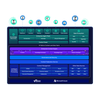
Hyland Content Innovation Cloud™
The platform to power content innovation
Content Innovation Cloud is the future of enterprise content management. By leveraging a unified content, process and application intelligence platform, your organization can unlock profound insights from enterprise content and unstructured data — fueling innovation without disruption.

Article
Business benefits of retrieval-augmented generation
Retrieval-augmented generation redefines how businesses harness information, merging AI capabilities with authoritative data to drive accuracy and innovation

Article
Navigating the pros and cons of unstructured data
Provide a brief summary of the page content (Search results page).

Article
Streamline automation by embedding agentic AI workflows
Discover how AI agents are transforming business processes from rigid, rule-based tasks into dynamic, goal-oriented systems that can reason, plan and adapt.

Article
How AI Agents are driving smarter business decisions
AI agents for business are transforming industries by improving decision-making and operational outcomes. Designed for scalability, they unlock powerful insights and elevate your organization's competitive edge.