AI agents, AI assistants and agentic AI
AI agents are proactive, achieving goals autonomously. AI assistants react to commands, performing defined tasks.

Summary
AI assistants, agents, and agentic AI each bring unique capabilities to intelligent automation.
AI assistants are reactive, task-oriented tools that perform straightforward prompts like scheduling or answering FAQs.
AI agents are proactive, goal-driven systems designed for complex, autonomous decision-making, adapting and learning over time.
Agentic AI elevates autonomy further, dynamically adapting to tasks and managing end-to-end workflows without predefined instructions.
Use cases:
Assistants simplify user interactions with natural language processing, enabling efficient task management and user-driven queries.
Agents excel in dynamic, intricate scenarios like fraud detection, supply chain optimization, and strategic planning.
Agentic AI powers advanced workflows, such as autonomous inventory management, real-time market analysis, and personalized customer solutions.

Forrester study: Unlocking the full potential of AI agents
Enterprise-wide AI agent adoption is accelerating
In this Hyland-commissioned study by Forrester Consulting, Forrester found that more than 45% of organizations already use AI agents and another 25% are piloting them. Although adoption is accelerating, most organizations struggle to scale beyond early use cases due to a lack of enterprise context.
Forrester provides key recommendations for how to get AI agents right, as well as detailed data on enterprise trends around agent use. Download this report to learn more about how organizations are looking to AI agents to optimize workflows, make smarter decisions and create more personalized experiences.
What is the difference between AI agent and an AI assistant?

AI assistants are reactive, executing straightforward tasks based on specific commands. AI agents are proactive problem-solvers, capable of autonomously setting and achieving goals.
AI agents represent the next phase of this evolution. Designed for autonomy, they can independently analyze, plan, and execute complex tasks, often adapting based on new data or goals.
Agentic AI extends process automation capabilities by autonomously solving goals and managing entire workflows with minimal human input. Unlike AI agents, which follow predefined instructions, agentic AI dynamically plans, selects tools, and executes actions based on the specific context of a task.

AI assistants
Reactive and task-oriented
Optimized for user-driven interactions, AI assistants simplify and streamline day-to-day routines through intuitive features.
Limited autonomy
Built to follow rules and commands provided by users, assistants lack the capability to autonomously adapt or take on unstructured tasks. This makes them highly reliable for standardized operations but less suited to dynamic environments.
Focus on user interaction
Using NLP, assistants decode user language into actionable output, delivering seamless experiences. They’re designed for accessibility, ensuring businesses and individuals alike benefit from their easy-to-use features.
AI agents
Proactive and goal-oriented
AI agents are at the forefront of advancing automation by independently managing tasks with precision. Their adaptability and strategic thinking redefine how businesses tackle challenges.
> Read More | What is agentic automation?
Greater autonomy
AI agents deploy persistent memory and adaptive algorithms to learn and evolve. They operate effectively in fast-changing environments, such as supply chain logistics or automated trading, ensuring alignment with organizational goals.
Focus on complex tasks
AI agents analyze, synthesize, and act in real-time. They excel in situations requiring intricate decision-making, such as simulating logistics models in manufacturing or deploying emergency response protocols in healthcare.
> Learn more | Explore the power of AI agents
Agentic AI
Highly autonomous and goal-driven
Agentic AI represents the next level of intelligent automation, delivering unparalleled autonomy. Agentic AI plans, adapts, and executes actions dynamically to achieve broader goals, even in shifting environments.
Dynamic tool usage
Agentic AI selects and sequences tools based on the unique context of a task, operating without rigid instructions. For example, given a task requiring data retrieval, transformation, and application across systems, agentic AI identifies the required tools and autonomously determines how and when to use them.
End-to-end process execution
This advanced capability allows agentic AI to oversee entire workflows. For instance, in end-to-end employee onboarding, it autonomously extracts role information, configures IT access, orders equipment, schedules training sessions, and sends personalized welcome messages. Each step is handled independently, ensuring seamless coordination with minimal human input.
Feature | AI Assistants | AI Agents | Agentic AI |
Primary Function | Handles routine tasks. | Tackles complex tasks. | Meets entire goals. |
Interaction | Direct, prompt-based interaction. | Minimize user interaction during workflow. | Adapts and coordinates steps without user input. |
Decision-Making | Execute pre-defined or user-directed actions. | Strategically analyze data, make decisions. | Independently plans actions and selects tools to achieve specific objectives. |
Learning Capability | Limited to prompt-specific improvements. | Develops persistent memory to adapt over time. | Continuously learns and adapts. |
Autonomy | Limited autonomy; requires precise prompts. | High autonomy; can operate with little to no human guidance. | Full autonomy; manages end-to-end workflows and adjusts dynamically. |
Complexity | Manages straightforward tasks with clear parameters. | Handles complex, multi-step processes and real-time decision-making. | Manages multi-layered workflows with no pre-defined sequences. |
Use Cases | Scheduling, customer inquiries, sending notifications. | Self-driving cars, fraud detection, personalized healthcare solutions. | Onboarding, inventory management, personalized customer solutions. |

Harvard Business Review Analytic Services pulse survey insights: Going beyond traditional AI and toward agentic AI
Many organizations find themselves unprepared to harness the full potential of AI. This pulse survey from Harvard Business Review Analytic Services reveals that while 94% of leaders recognize the importance of well-connected data for AI success, only 27% have achieved it.
In “Bridging the Readiness Gap to the Agentic Enterprise,” learn about strategies for fully connecting your content and how leading enterprises are thinking about transforming unstructured content into connected pipelines.
How AI assistants, AI agents, and agentic AI works
The key difference among AI assistants, agents, and agentic AI lies in their modes of operation:
Assistants operate within user-provided instructions to complete tasks efficiently.
Agents execute complex workflows with a large degree of autonomy.
Agentic AI dynamically adapts to tasks, orchestrating end-to-end processes with minimal human intervention.
The AI assistant approach
AI assistants function as reactive tools built to respond to specific user prompts. They operate within a “prompt-response” loop, relying heavily on user inputs to initiate tasks. For example, asking Google Assistant, “Set a reminder for tomorrow at 3 PM,” triggers the assistant to execute the task immediately based on the provided instruction.
These assistants leverage advanced natural language processing (NLP) enabled by large language models (LLMs) to enhance conversational interaction and task precision. However, their functionality is inherently reactive and limited to predefined parameters.
The AI agent approach

AI agents are proactive systems that take charge of tasks with minimal user intervention. They analyze objectives, break them into actionable components, and execute independently. Equipped with advanced features like task chaining, persistent memory, and contextual decision-making, agents adapt and learn over time to improve performance.
For example, in banking, an AI agent tasked with fraud detection might independently monitor transactions, identify unusual patterns, and make targeted recommendations to reduce risk without requiring ongoing input from a human operator.
> Learn more | From tellers to terabytes: The digital makeover of modern banking
The agentic AI approach
Agentic AI operates as a fully autonomous system capable of achieving goals with minimal to no human intervention. It doesn’t rely on predefined instructions or rigid workflows. Agentic AI dynamically analyzes a task, determines the necessary steps, and selects the appropriate tools to execute those steps in the optimal sequence.
For example, in autonomous inventory management, agentic AI can:
monitor stock levels
predict future demand based on historical data
place orders with suppliers
adjust restocking schedules according to fluctuating market conditions.
Each action is coordinated fluidly, allowing the system to adapt if supply chain disruptions occur or customer demand shifts unexpectedly.
> Read more | Understanding the different types of AI agents
Use cases

AI assistants, AI agents and agentic AI find applications across diverse industries where automation and efficiency are critical. Below are some examples of each technology:
Customer Support
AI assistants handle straightforward user inquiries, such as providing order tracking information or answering FAQs.
AI agents improve workflow processes by autonomously predicting customer needs and reassigning tickets to shorten resolution times.
Agentic AI autonomously resolves complex customer issues by coordinating seamlessly across multiple departments and systems.
Banking
AI assistants send notifications about new promotions or alert users of low balances.
AI agents monitor financial transactions, detect anomalies, and mitigate risks by flagging potentially fraudulent activities.
Agentic AI could autonomously oversee fraud mitigation workflows by analyzing risk patterns, contacting cardholders, and freezing suspicious accounts without incremental oversight.
Healthcare
AI assistants simplify tasks like pulling patient records or scheduling appointments.
AI agents process claims and sort clinical documents for streamlined workflows.
Agentic AI dynamically analyzes patient data, creates personalized care plans, schedules follow-ups, and even orders required testing autonomously.
Retail
AI assistants help manage customer interactions, like chat-based inquiries about product availability.
AI agents optimize inventory by assessing incoming data and projecting market demands.
Agentic AI could autonomously run end-to-end scenarios, such as planning product launches, adjusting inventory dynamically based on real-time sales data, and managing supplier communication.

Analyst white paper: Maximize your business value with content intelligence and AI
Intelligent Business Strategies examines how Hyland helps you unlock the hidden value of your data
AI agents are transforming the way organizations manage unstructured data and optimize workflows. Intelligent Business Strategies's white paper, "Maximizing Business Value from Content Intelligence and AI," dives into these innovations, showcasing how AI agents automate repetitive tasks, produce actionable insights and empower smarter decision-making. Explore the white paper now to see how AI agents can redefine your unstructured data strategy.
Risks and limitations
Despite their impressive capabilities, AI assistants, agents, and agentic AI each come with their own challenges.
AI assistants rely heavily on explicit prompts, which can lead to errors if commands are unclear or ambiguous. Their functionality is confined within programmed boundaries, limiting their flexibility and ability to tackle unstructured tasks.
AI agents excel in autonomy but are not without risks. They can encounter issues like infinite decision loops, improper prioritization due to data gaps, or challenges in aligning with strategic objectives. Additionally, their computational intensity often translates to higher deployment costs.
Agentic AI takes automation a step further, dynamically adapting to complex workflows and managing end-to-end tasks. However, its advanced capabilities introduce challenges in initial integration, as it demands robust infrastructure, fine-tuned models, and precise monitoring to ensure effective deployment. There’s also the potential for over-reliance on its automation, which may require human oversight to mitigate.
The future
The future of AI presents a compelling vision where assistants, agents, and agentic AI work seamlessly together to amplify organizational efficiency. A recent Forrester Consulting study, Enterprise Context: Unlocking the Full Potential of AI Agents, found 45% of respondents report their organization is already using AI agents, and 25% say their company is piloting them.
They’re using them for things like improving customer experiences (99%), operational/process efficiency (96%) and extracting intelligence from enterprise knowledge (93%).
Agents will tackle complex, dynamic challenges, delivering valuable solutions with minimal input. Meanwhile, agentic AI will push the boundaries further, autonomously orchestrating intricate, multi-layered workflows across industries.
As AI agents become increasingly normalized and more efficient, Hyland has the tools and the roadmap to help you optimize your AI investments. When you can transform unstructured data into actionable, AI-ready assets, you can enable smarter workflows, faster decisions and more scalable innovation.
Key AI solutions
Knowledge Discovery: Retrieve vital insights with natural language queries, enabling quicker, data-driven decisions.
Knowledge Enrichment: Organize unstructured data into structured formats to enhance workflows and support AI applications.
Agent Builder: Create custom AI agents to automate tasks, foster collaboration, and scale AI across your organization.
Hyland Automate: Agentic process automation and orchestration enabling organizations to transform their operations with the power of AI.
Hyland IDP: An intelligent document processing software that delivers AI-powered agentic document processing.
> Learn more | Use AI to redefine content management with Hyland
Why Hyland?
Empower your team with tools that boost efficiency and accuracy, accelerate decision-making, and drive innovation. Deliver better customer experiences with faster response times and leverage responsible, compliant AI solutions to stay ahead.
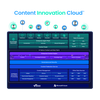
Hyland Content Innovation Cloud™
The platform to power content innovation
Content Innovation Cloud is the future of enterprise content management. By leveraging a unified content, process and application intelligence platform, your organization can unlock profound insights from enterprise content and unstructured data — fueling innovation without disruption.

Article
Explore the power of AI agents
AI agents are revolutionizing the way we work. These intelligent digital workers automate tasks, improve efficiency and unlock new possibilities.

Article
Use AI to redefine content management with Hyland
The tools that redefining content management with AI

Article
Automated intelligence vs. artificial intelligence: What’s the difference?
Today’s technologies pack a lot of similar words and complicated nuances into their meanings. Learn the differences between automated intelligence and AI.

Article
AI skills gap: Strategies for a future-ready workforce
Discover targeted strategies that help bridge the AI skills gap and equip your workforce with the necessary skills to thrive in an AI-everywhere world.