How to improve employee productivity with agentic AI
Go beyond simple automation and empower your workforce with agentic AI that handles complex tasks, reduces friction, and accelerates decision-making.

Summary
Agentic AI offers a solution to employee burnout by fundamentally changing how work gets done.
Core challenge: Employees lose focus and stall progress because they are overwhelmed by multitasking, switching between applications and searching for information.
The solution: Redesign entire workflows around human-agent collaboration to eliminate low-value work and unlock greater strategic focus.
Strategic value: Automating routine tasks accelerates access to information, so employees can make faster, more informed decisions and focus on high-impact initiatives.
Understanding agentic AI: The 'independent assistant' model
Agentic AI drives a fundamental shift from reactive text generation to autonomous goal-driven execution. By moving beyond standard large language models, organizations deploy independent systems that use integrated toolsets and multistep logic to orchestrate complex business workflows. This transition transforms technology from a passive assistant into a proactive collaborator that acts directly on enterprise data to resolve process bottlenecks.
Beyond the LLM
Agentic AI is more than a large language model (LLM). It’s a goal-oriented system. It uses LLMs for reasoning but is also equipped with "tools" like APIs to take direct action within your enterprise applications. Think of it as an independent assistant, not just a query-and-response machine.
Key characteristics
Autonomy: Agents work independently to complete tasks with minimal human intervention. Hyland’s Enterprise Agents are designed for mission-critical business workflows, so you can automate complex processes, not just simple queries.
Tool use: Agents connect to core business systems like Salesforce, Workday and other ERPs. They use APIs and prebuilt connectors to perform actions directly, such as updating records or provisioning software.
Proactive problem-solving: These agents execute complex, multistep workflows. A single request can trigger a series of coordinated actions across different departments and systems, which radically simplifies operations.
> Read more | AI agents, AI assistants and agentic AI
Reimagining the workflow: From executor to orchestrator
Total process reinvention fuels significant productivity gains. Most organizations face a paradox where widespread AI deployment fails to move the needle on earnings. This stagnation persists because leaders frequently layer new technology over broken manual processes rather than rearchitecting the work itself.
Vertical process orchestration drives economic impact
While enterprise-wide chatbots offer minor individual time savings, proactive agents accelerate business cycles by automating complex workflows. This shift redefines the human role. Specialists act as orchestrators who supervise and guide autonomous agent teams. They no longer execute every manual step of a process.
Strategic impact requires end-to-end process ownership
Leaders must evaluate how business functions operate when agents manage the bulk of daily operations. Moving away from isolated task automation toward full process ownership collapses cycle times. Agents coordinate multiple steps simultaneously to resolve a high volume of common incidents without manual intervention. According to research from McKinsey, this architecture reduces backlogs by 30 to 50 percent and allows human capital to focus on high-stakes negotiation and growth initiatives.
> Read more | Streamline automation by embedding agentic AI workflows

Forrester study: Unlocking the full potential of AI agents
Enterprise-wide AI agent adoption is accelerating
In this Hyland-commissioned study by Forrester Consulting, Forrester found that more than 45% of organizations already use AI agents and another 25% are piloting them. Although adoption is accelerating, most organizations struggle to scale beyond early use cases due to a lack of enterprise context.
Forrester provides key recommendations for how to get AI agents right, as well as detailed data on enterprise trends around agent use. Download this report to learn more about how organizations are looking to AI agents to optimize workflows, make smarter decisions and create more personalized experiences.
High-impact use cases for employee productivity
Organizations capture immediate value by deploying agentic automation to high-volume workflows that currently rely on manual intervention. These high-impact use cases prioritize operational agility and rapid decision-making across IT, HR and administrative functions to eliminate process bottlenecks and reduce employee burnout.
Self-service IT & HR
AI agents can instantly resolve common IT and HR requests. This includes password resets, software access provisioning and answering policy questions about PTO or benefits. This is possible through direct integration with systems like ServiceNow and Workday, allowing agents to take real-time action and significantly reduce support backlogs.
Enterprise-wide knowledge retrieval
Agents eliminate time wasted searching for information. They use natural language to query content across the entire enterprise, including SharePoint, network drives and other repositories. Hyland Knowledge Discovery uses a federated approach, providing a consolidated view of all content without requiring risky and expensive data migrations.
Administrative orchestration
You can automate complex, multistep administrative processes. This includes expense report approvals, purchase requisitions and vendor onboarding. By leveraging a framework like Hyland's Enterprise Agent Mesh, multiple specialized agents coordinate to manage a single workflow, ensuring information passes seamlessly between departments like finance, procurement and legal.
> Read more | Intelligent document processing: 20 use cases
The human-agent collaboration model
AI isn't replacing jobs; it's creating a new "skill partnership." The future of work is a three-way collaboration between humans, AI agents and physical machines. Research shows more than 70% of current human skills will remain relevant but will be applied differently — focused on supervision, critical thinking and emotional intelligence.
The rise of AI fluency
The ability to effectively manage and interact with AI tools is a fast-growing skill requirement. The human role is evolving from doing the manual work of researching and drafting to framing the right questions, interpreting AI-generated results and making strategic decisions. It requires a different way of thinking.
Choosing the right collaborative framework
Effective collaboration requires a shared context between humans and agents. Hyland's Enterprise Context Engine creates a living record of enterprise operations by unifying content, processes and people. This provides both human users and AI agents with a complete, real-time understanding of the business, ensuring their actions are aligned and contextually aware.
> Read more | Effective strategies to bridge the AI skills gap
Strategic implementation of agentic AI
Scaling agentic AI across the enterprise demands a transition from scattered experimentation to industrialized delivery models that align autonomous workflows with core strategic priorities.
Identify integration-ready use cases
Start with high-variance, low-standardization workflows where agents deliver the most value. Good examples include complex financial information extraction or nuanced customer service escalations. Don't use agents for simple, highly predictable tasks where traditional automation is more efficient and reliable.
Establish a robust data foundation
Poor data is the primary roadblock to successful AI. Your content must be made AI-ready. Hyland Knowledge Enrichment service transforms unstructured content from over 600 file formats into clean, structured and context-rich data that fuels reliable agent performance.
> Read more | Before you invest in AI, assess your AI-readiness
Enforce human-in-the-loop (HITL) governance
Build trust and ensure quality by embedding human oversight into automated processes.
Measure multidimensional success
Track metrics beyond simple task completion. You need to measure the reduction in process cycle times, which can drop by 20-80%. Also, track the increase in time employees spend on strategic work and overall user adoption rates.
> Read more | AI strategy essentials for success
Build AI agents with a point-and-click interface
Hyland Agent Builder empowers you to efficiently design, deploy and manage AI agents, so you can automate complex workflows with ease while maintaining control through human oversight.
Build your agentic workforce from the ground up or choose from a catalog of prebuilt agents, then manage the entire lifecycle to align with your evolving business needs.
Technical implementation and governance
Transitioning to an agentic operating model demands a modular architecture that orchestrates multi-agent collaboration while enforcing strict governance over autonomous workflows.
Solve the unstructured data problem
AI-powered systems must ingest and classify high volumes of unstructured content to fuel autonomous decision-making. Effective architectures digitize and structure this data at the source, adding essential context to create a foundation of AI-ready information. Federation capabilities allow these solutions to securely access content across on-premises and cloud repositories, eliminating the need for high-risk data migrations.
Prioritize agentic component reuse
Modular design prevents redundancy and technical debt. Instead of building unique agents for every isolated task, developers should create validated, reusable components. This standardized approach allows teams to share services across the enterprise, reducing redundant development work by 30-50%.
Orchestrate via open standards
Scalable automation requires a framework that coordinates how multiple agents collaborate across complex processes. Utilizing open standards ensures that internal agents can communicate with third-party systems, preventing vendor lock-in. This creates a connected, vendor-agnostic ecosystem that adapts to rapid technological shifts while maintaining operational control.
> Read more | Unstructured data management: Unlocking business value
Building trust in AI output
As AI agents transition from passive tools to proactive decision-makers, organizational trust becomes the primary bottleneck for scalable impact. Peer-to-peer leaders recognize that teams will not adopt systems they cannot audit, and without a foundation of transparency, even the most advanced automation will face internal resistance.
Onboard agents like employees
Successful deployment requires treating agentic systems like new hires. This involves defining clear "job descriptions" for specific goals, providing continuous feedback loops and utilizing rigorous evaluations to codify expert knowledge. By establishing these performance benchmarks, leaders ensure that autonomous agents remain aligned with business logic and deliver consistent results.
Enable step-by-step verification
High-trust architectures provide full traceability by linking every insight directly back to source documentation. Implementing observability tools into the workflow allows teams to monitor agent logic in real time, ensuring errors are identified and corrected before they impact the business cycle. This visibility transforms the "black box" of AI into a transparent process that users can verify and improve.
Apply robust guardrails and governance
Responsible AI deployment rests on platform-agnostic security guardrails and strict data governance. To protect intellectual property, enterprise data must remain isolated in segregated environments, secured with industry-standard encryption and strictly excluded from training third-party models. These protocols ensure that as organizations harness agentic automation, they maintain the highest standards of security and compliance.
A hard-won lesson of this recurring problem is that companies should invest heavily in agent development, just like they do for employee development.

Subscribe to The Shift
Hyland’s monthly newsletter helps you elevate your content management strategy
Offering unparalleled insights into the AI and cloud technologies transforming what content can do, The Shift gives you actionable strategies from industry thought leaders. Learn from real-world success stories and innovative perspectives that will keep your organization at the forefront of ECM transformation.
Subscribe to stay ahead, stay informed and make your enterprise content an even more strategic asset.
Begin your agentic AI journey
Improving employee productivity requires more than just tools. It demands a new operational model built on intelligent automation. Hyland Content Innovation Cloud™ provides the comprehensive platform to make this a reality. By creating an AI-ready data foundation with Knowledge Enrichment deploying intelligent agents with Hyland Agent Builder and Knowledge Discovery and orchestrating it all with Hyland Automate, you can build a more efficient, empowered and productive enterprise.
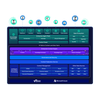
Hyland Content Innovation Cloud™
The platform to power content innovation
Content Innovation Cloud is the future of enterprise content management. By leveraging a unified content, process and application intelligence platform, your organization can unlock profound insights from enterprise content and unstructured data — fueling innovation without disruption.

Article
Business benefits of retrieval-augmented generation
Retrieval-augmented generation redefines how businesses harness information, merging AI capabilities with authoritative data to drive accuracy and innovation

Article
Navigating the pros and cons of unstructured data
Provide a brief summary of the page content (Search results page).

Article
Explore the power of AI agents
AI agents are revolutionizing the way we work. These intelligent digital workers automate tasks, improve efficiency and unlock new possibilities.

Article
How AI Agents are driving smarter business decisions
AI agents for business are transforming industries by improving decision-making and operational outcomes. Designed for scalability, they unlock powerful insights and elevate your organization's competitive edge.